D.M. Smith Building Rehabilitation
Revealing performance and purpose within a historic landmark
At the northwest edge of Georgia Tech’s historic campus core, the D.M. Smith Building has long served as a quiet anchor for the School of Public Policy. Originally constructed in 1938, the building’s generous structure and daylight potential were gradually obscured by decades of incremental change, resulting in a space that felt closed, inefficient, and disconnected from the evolving needs of contemporary academic life.
Delivered in partnership with Annum Architects as Lead Design Architect and Architect of Record, Houser Walker Architecture contributed to the building’s transformation, helping deliver a high-performance, light-filled learning environment that repositions D.M. Smith as a vibrant academic destination. The renovation carefully balances preservation with reinvention, retaining the building’s historic character while opening its interior to daylight, clarity, and connection.
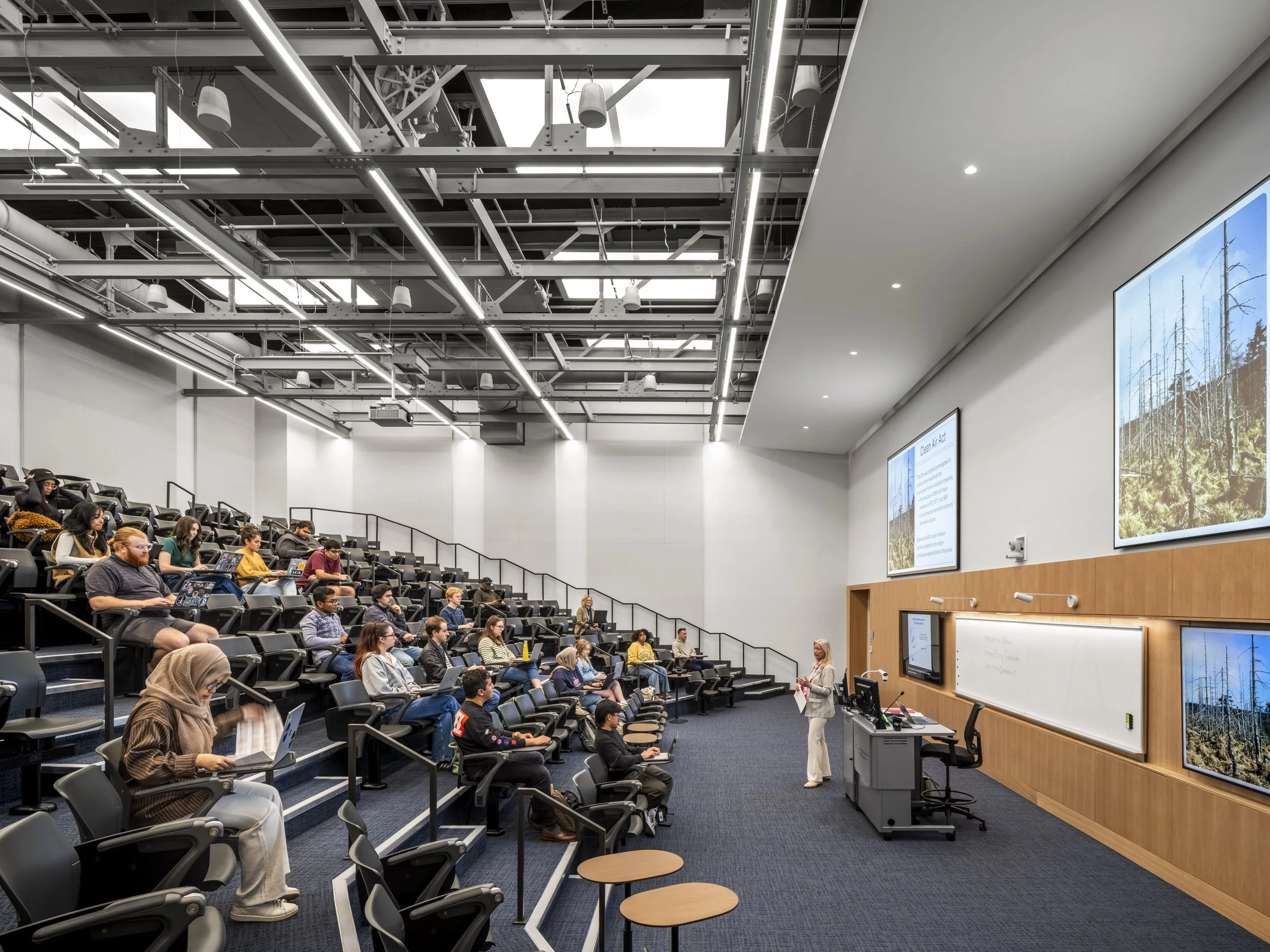
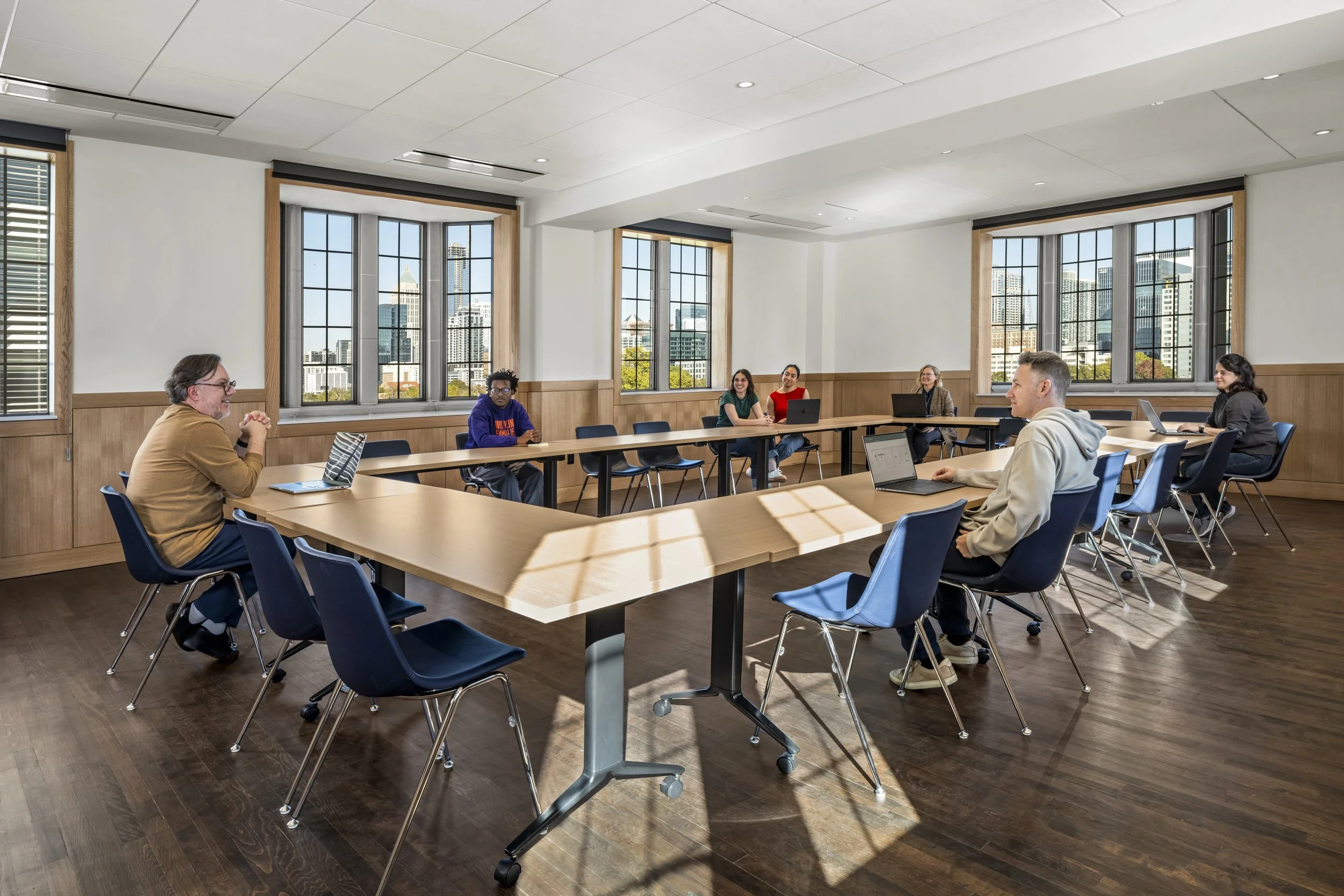
The reimagined interiors emphasize transparency and flow. Circulation spaces become places to gather and study, while classrooms, seminar rooms, and collaborative areas are organized to support a range of teaching and learning styles. Strategic interventions such as removing barriers, aligning sightlines, and introducing new material warmth create an environment that feels both contemporary and rooted.
Sustainability is integral to the project’s vision. Certified LEED 4.0 Platinum, BD+C in 2026, the building incorporates a high-efficiency hydronic mechanical system, maximizes daylight access, and preserves existing structural assets to reduce embodied carbon. These strategies not only enhance performance but also elevate the daily experience of students and faculty.
The project demonstrates the value of collaborative design, bringing together preservation, performance, and program into a cohesive whole. The result is a renewed academic building that supports Georgia Tech’s mission while honoring its architectural legacy
Client
Georgia Institute of Technology
Location
Atlanta, GA
Status
Completed
Size
37,000sf
Architect of Record
Annum Architects, Boston, MA
Collaborators
Newcomb & Boyd
Hammond Engineering
Uzun+Case Structural Engineers
Koons Environmental Design
Palacio Collaborative
Epsten Group
J&A Engineering
WJE
Tags

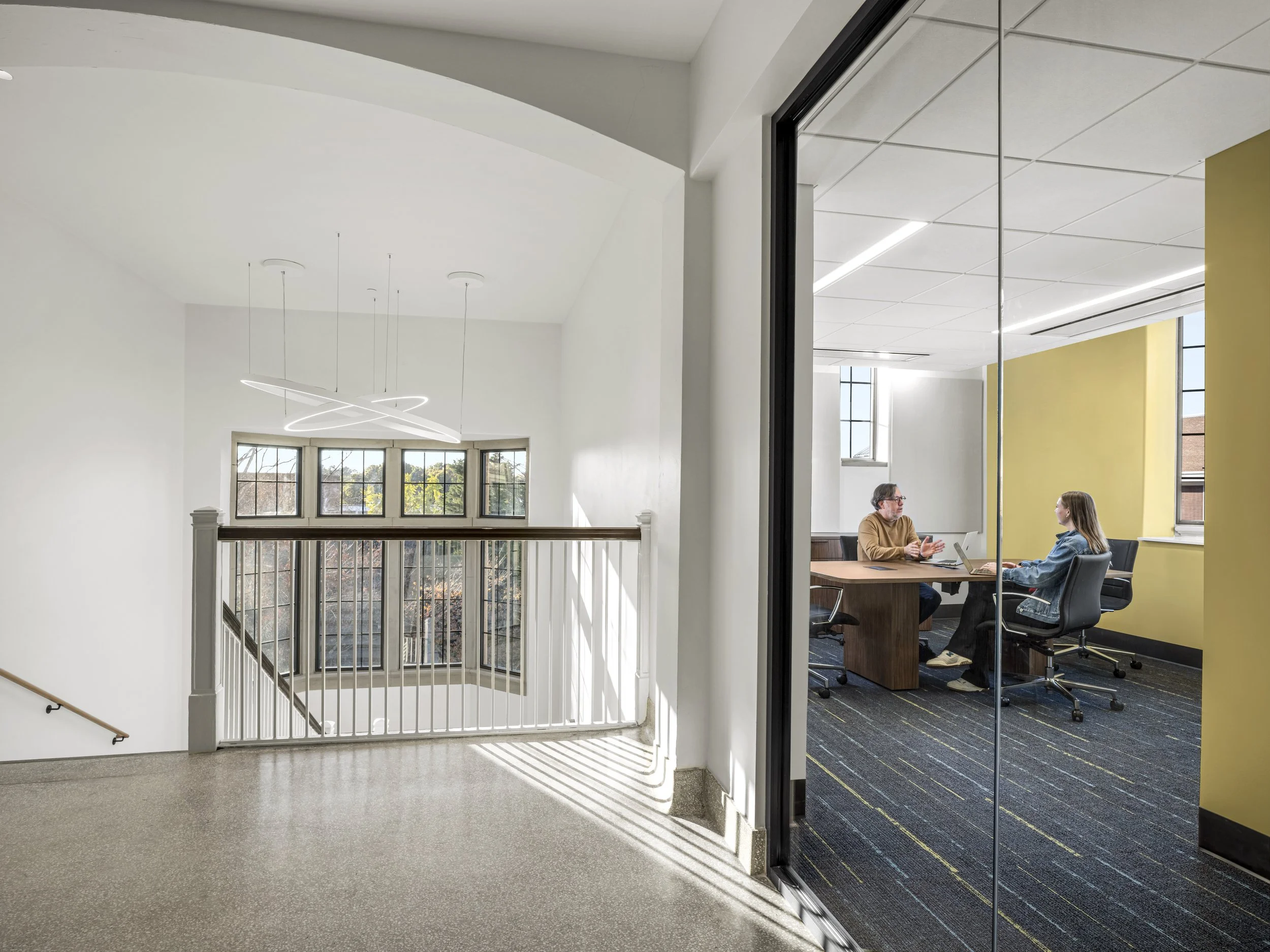
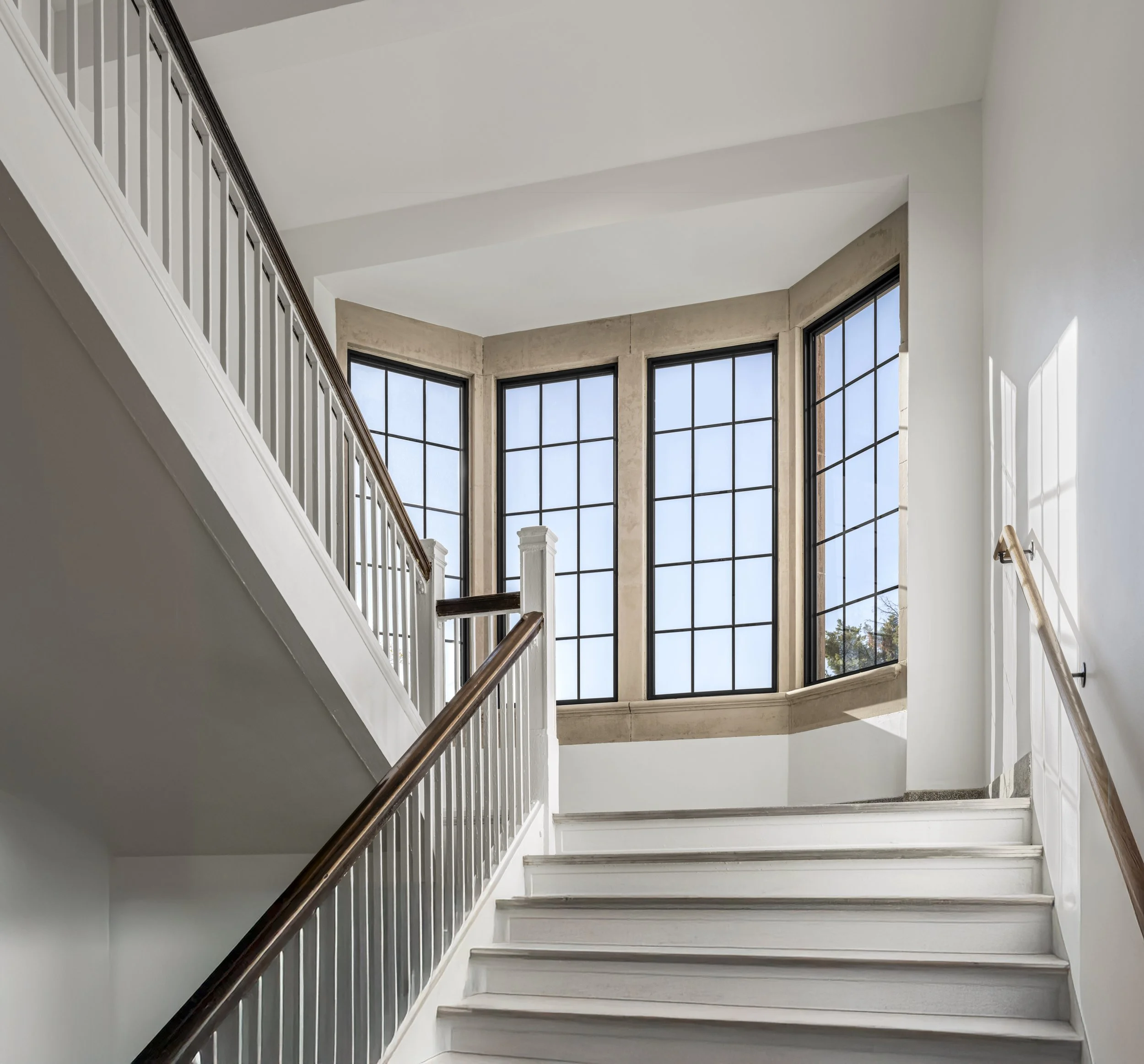
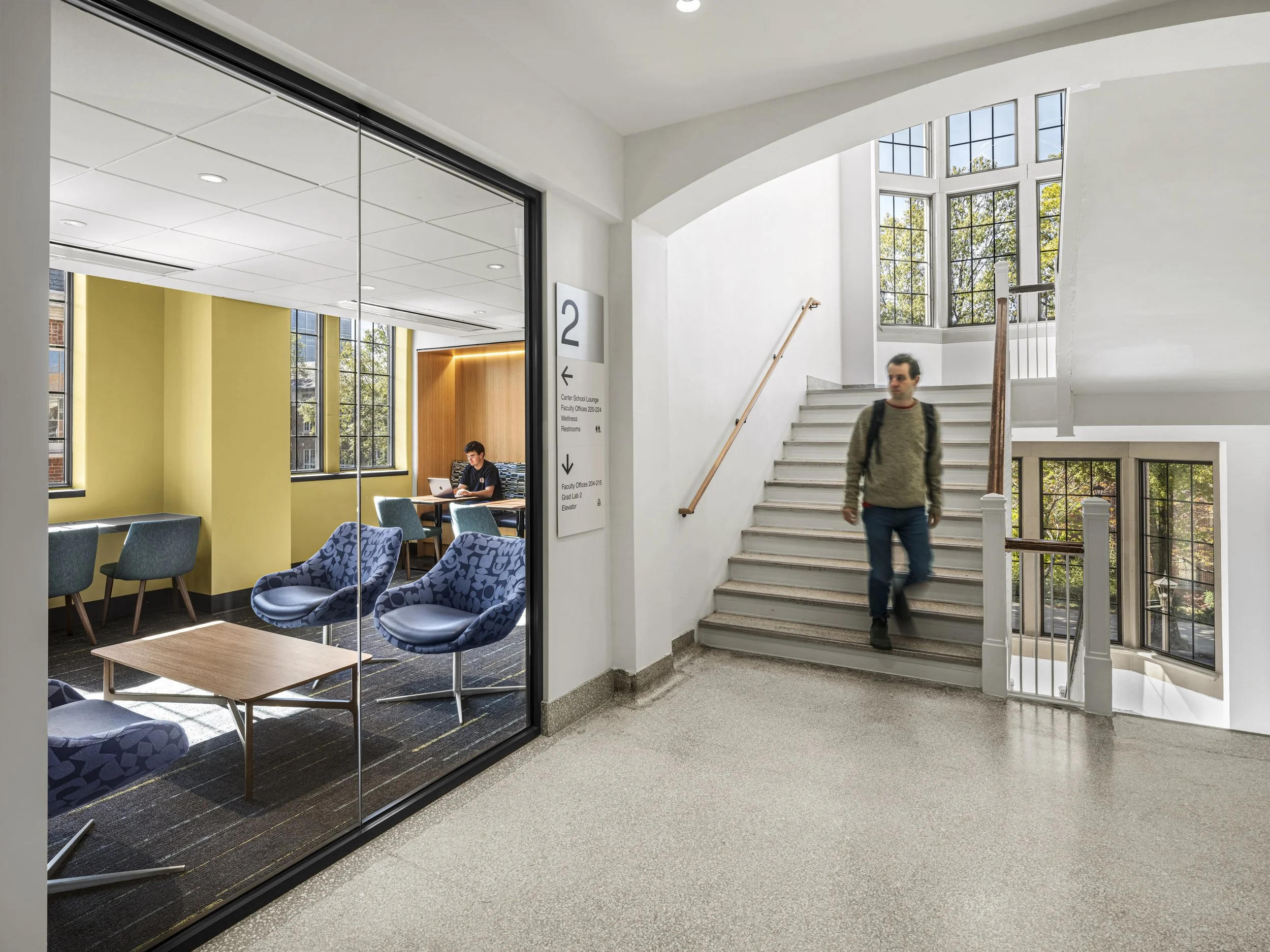
What was once a constrained and utilitarian stair is reimagined as a defining spatial experience. Previously enclosed and visually disconnected, it lacked the clarity and presence expected of a primary academic circulation path.
The design uncovers the strength of the original structure by opening the volume and restoring access to perimeter windows, allowing natural light to define the space and create a welcoming vertical connection. Historic railings and architectural details are preserved and refined, balancing continuity with a more elevated expression.
A contemporary lighting intervention reinforces orientation and identity. Suspended fixtures accentuate verticality and establish the stair as a central organizing element, making movement through the building more intuitive and engaging.


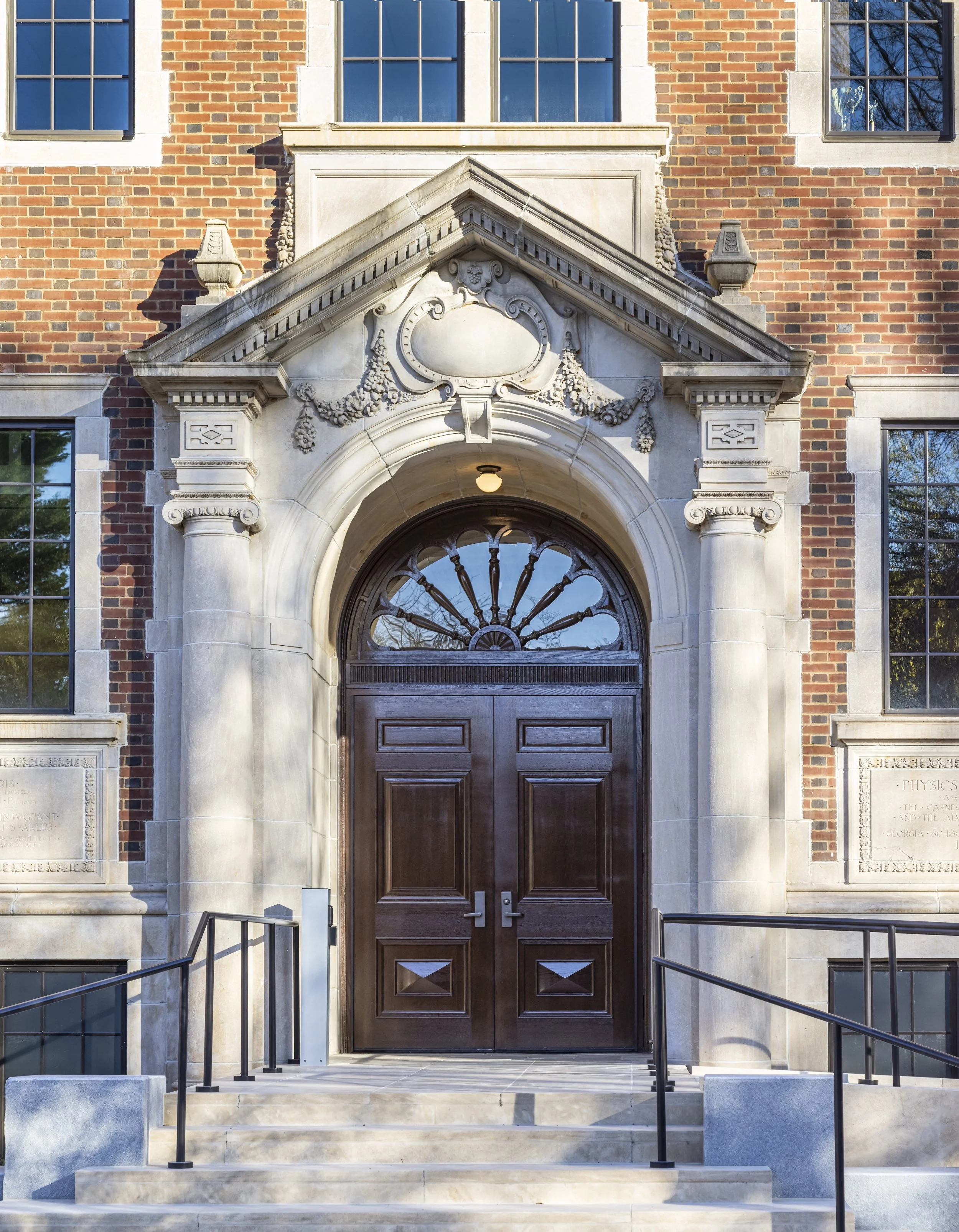
The historic entrance is carefully restored to reinforce its presence within Georgia Tech’s campus fabric. Original stonework, ornamental detailing, and the arched portal are preserved and refined, while new interventions introduce clarity and accessibility.
Recrafted wood doors and subtle site improvements enhance both performance and arrival sequence, balancing heritage with contemporary use. The result is an entry that honors the building’s legacy while presenting a renewed and dignified threshold for daily campus life.